How to Choose the Right Skin Care Manufacturer
- Blog
- How to Choose the Right Skin Care Manufacturer
- Admin
- 19 Aug, 2026
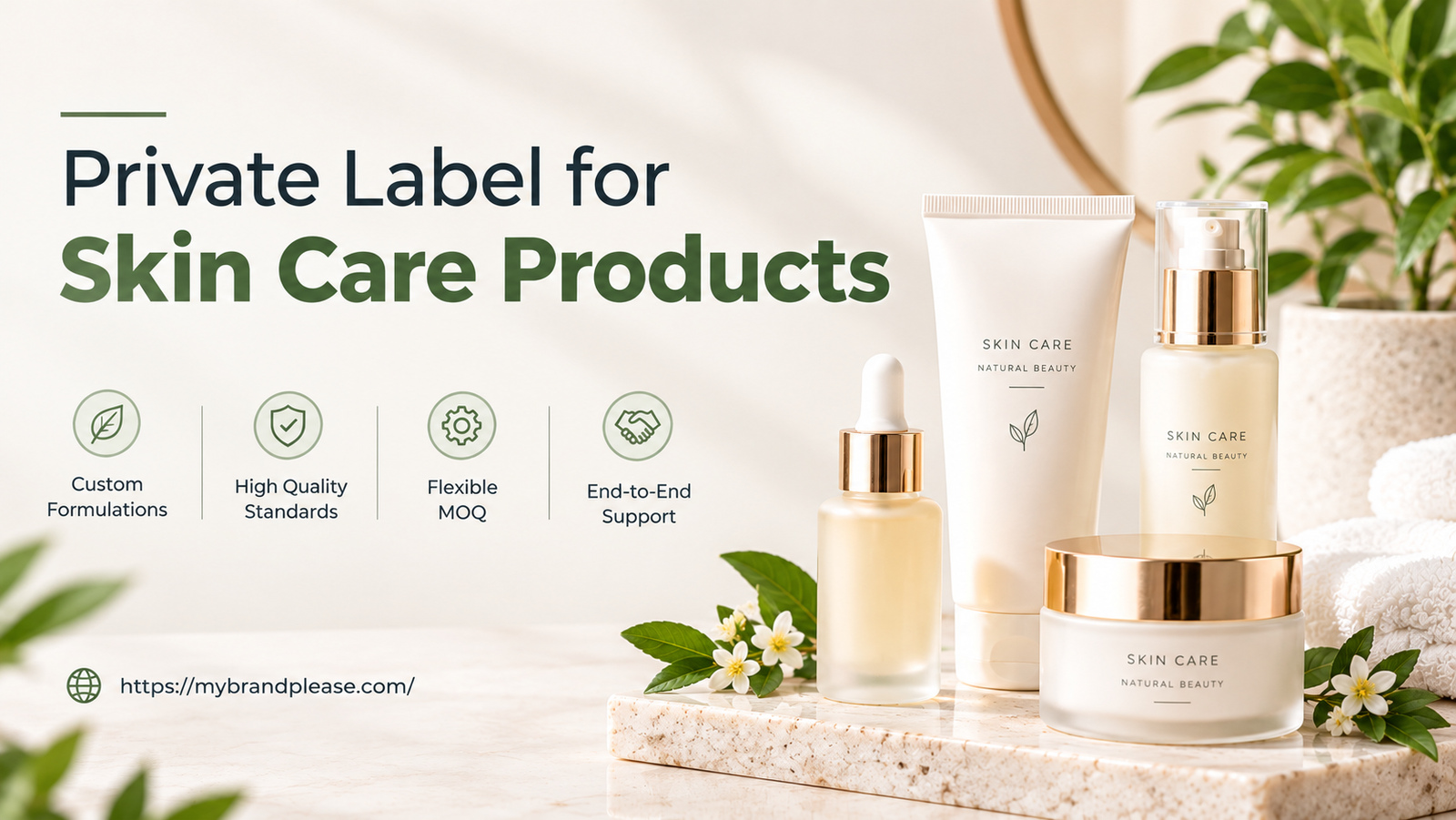
Choosing the right skincare manufacturer involves evaluating product quality, ingredients, formulation expertise, pricing, packaging, and quality standards. A reliable manufacturing partner helps businesses create customised skincare products, manage production costs, meet regulatory requirements, and maintain consistent quality while building a trusted skincare brand.
The private label for skin care products business is booming as more and more people are paying attention to ingredients, product quality, skin issues, and skin care routines. If you're someone who wants to start your own skin care line, choosing the best manufacturer can be one of the most important decisions in the process. A good manufacturer can help take an idea and turn it into a finished product.
Selecting a private label for skin care products involves some investigation and transparent discussion, as well as a focus on your organisation's goals. Whether you are trying to develop facial cleansers as well as creams or serums, toners, and also body lotions, the right supplier needs to understand your target market and also item needs.
Prior to you starting your business, take into consideration the experience of the manufacturer, the formula abilities, the quality control business practices, the minimum order quantity, as well as the packaging designs. Understand the regulations that apply to your products, as well as exactly how you can manage your organisation in your state. With thorough planning, it is feasible to have a successful skin care business with lasting sustainability.
Understanding the Role of a Skincare Manufacturer
Private Label for Skin Care Products is a company that creates skin care products & personal care products for brands, retailers, aesthetician professionals & new brands. Some manufacturers offer turnsets and ready-made formulas, and others also offer bespoke product development, filling, bottle decorating & labelling services.
If someone is planning on using a private label for skincare products, then they can easily cooperate with the manufacturer to offer the products under their personal name without even a manufacturing setup. This can help them to focus on marketing, customer handling, sales and branding.
Typical Types of Products Manufactured by Skincare Manufacturing:
-
Facial cleansers and cleansing balms
-
Moisturisers and hydrating creams
-
Vitamin C and other facial serums
-
Sunscreens and specialised skincare products
-
Face Masks, Toners and Exfoliators
-
Body lotions and nourishing creams
The services that are on offer depend on the manufacturer you are dealing with. It is therefore very important to check that a possible partner provides the products, customization and manufacturing support you require.
Benefits of Selecting the Best Skin Care Manufacturer
There are many benefits of partnering with the right manufacturer.
Consistent Product Quality
The quality of the product is another important factor for customer satisfaction. A good manufacturer has a disciplined production process to follow, quality raw materials, and quality monitoring in the manufacturing process. Quality factories can produce reliable products for customers and gain their confidence.
Cost-Efficient Manufacturing
To set up a private label for skin care products, the company needs to invest a lot of money in machinery, skilled labour, raw materials, and production plants. Instead of this, they can join hands with another manufacturing company that helps the startup to save initial costs.
Rapid Brand Building
Pre-made formulas provided by manufacturers also ease the transition from planning to product launch. Product customisation may require other help with packaging, label design, and manufacturing process planning.
Product Customisation
Different clients will have varying preferences when it comes to their skincare needs. A good partner will have the necessary choices in regard to scent, texture, ingredients, packaging and product placement. These factors can help define a range of products to reflect the brand image and customer base.
Scalability and Business Expansion
As your sales volume grows, you may need to alter your production run. An established private label for skin care products can assist in scaling up your order, managing product variation and ensuring the product remains consistent at higher volumes. Always check production capacity and lead times before choosing to scale.
Important Factors to Consider Before Choosing a Manufacturer
Choosing a private label for skin care product manufacturing partners goes far beyond pricing. Before you enter into an agreement, consider the following.
Experience & Knowledge in Production
Check the manufacturer's background with the products that you plan to sell. They may produce some products, but not others. For instance, a manufacturer familiar with creams may not be experienced with top-of-the-line serums or even sun protection products.
Ingredients and Formulation
Products' ingredients impact the texture, stability, performance and cleanability of the product for their intended use. Require ingredient lists, any appropriate supporting documentation from suppliers and evidence of formulation development. If you intend to sell sensitive skin or concern-specific products, discuss what evidence the products will require.
Quality Control and Product Evaluation
An accountable producer's quality procedures ought to be documented and suitable to the private label skin care products and related procedures. Depending upon the type of product, this could include testing for stability, microbiological safety, and microbial resistance, as well as raw materials and finished product examination.
MOQ & Pricing
This is the number of units you are required to order in a production order. This is helpful for new companies as they will not have to carry risk in inventory.
Compare quotes, considering any changes for formulation, packaging, labelling, testing, shipping and even delivery charges. For the same offer, the lowest initial price may not always be the most advantageous in the long run.
Package & Labelling Assistance
Packaging is used to safeguard the formulation and give your customer an experience that will either build or hinder the perception of your brand. Inquire if the manufacturer has bottles, jars, tubes, pumps, cartons, and personal label packaging available.
Communication and Delivery Reliability
Communicate well to avoid confusion about samples, specifications, order quantity and delivery times. Select a partner who is prompt with a timeline, answers your questions and explains what they will do if a sample is delayed or of sub-standard quality.
Regulatory Knowledge
Cosmetic regulations vary from country to country and for different product types. Make sure that your private label for skin care products manufacturer is aware of the regulations that will apply to your product and market, including ingredient restrictions, safety, labelling, manufacturing requirements and permitted claims. Get it in writing who will be responsible for handling the documentation.
Communication and Delivery Dependability
Communicating well will protect against confusion on the content of samples, specifications, order quantities and delivery dates. Select a vendor that offers reasonable timescales, addresses your queries and assures you how production delays or quality issues will be handled.
Why Choose Us?
Partnering with the right private label for skin care products provider gives your business a more solid base to develop and launch a product into the market.
To gain a better understanding of Mybrandplease as a company, look into the services that they offer, the range of products, the tailorability of the products, quality certification and documentation, costs and turnaround times. Make sure you check which services suit your needs.
A suitable manufacturing relationship should offer:
-
Clear communication about product specifications and costs
-
Formulation options aligned with your target audience
-
Transparent production schedules and order requirements
-
Correct quality testing & recording
-
Packaging and labelling coordination
-
Backing of subsequent product launches & bulkier orders
A collaborative that is right will emerge from validated capabilities, transparent expectations, and common business goals – not on promises.
The Process of Working With a Skincare Manufacturer
A structured process can make private label for skin care product development more manageable and reduce avoidable mistakes.
Define Your Brand Requirements
Begin with your customer, and decide on your product category, target price point, ingredients you'll be including, and sales channels. Do you want an entry-level basic range or something more niche that addresses specific customer concerns.
Research and Shortlist Manufacturers
View multiple brands side by side regarding experience, available formulations, capability, quality system, MOQ, and assistance. Look through company profile information, and ask for references or related documentation when available.
Request Samples and Evaluate Formulations
Private label for skin care products samples that will be used to test texture, smell, look, packaging compatibility, and user experience. If any customised formulations will be used, go over formulation modifications and decide on an approval specification.
Pricing & Production Terms Check
Ask for a comprehensive quote, which includes product prices, packaging, labelling, testing, shipping, terms of sale and when to expect the items. Enquire whether the formulas are the owner's, if documents need to stay secret, what happens to. Rejected loads, etc.
Verify Compliance and Product Testing
Prior to commercial production, develop products to meet the safety and regulatory specifications. Check ingredient specs, tests, labels and substantiation for all product claims. Responsibilities to develop products should be established prior to product production.
Approve Packaging and Start Production
Finalise the formula, packaging, label design, order quantity, and schedule. Before placing the run, get the final details approved in writing.
Monitor Performance After Launch
After a private label for skin care products hits the shelves, gather customers' feedback, keep an eye on complaints, track your sales and evaluate your products' efficiency. Keep batch records and collaborate with your manufacturer to resolve any quality issues or setbacks.
Manufacturer Evaluation Checklist
Use this table to compare potential manufacturing partners before making your final decision.
|
Evaluation Factor |
What to Check |
Why It Matters |
|
Experience |
Relevant product expertise |
Supports suitable product development |
|
Ingredients |
Supplier and ingredient documentation |
Helps assess formulation quality |
|
Testing |
Stability and microbiological testing, where applicable |
Supports product safety and consistency |
|
MOQ |
Minimum units per order |
Helps manage inventory investment |
|
Pricing |
Complete cost breakdown |
Improves budget planning |
|
Packaging |
Available containers and customization |
Supports product protection and branding |
|
Compliance |
Applicable market requirements |
Helps reduce regulatory risks |
|
Delivery |
Lead times and production capacity |
Supports reliable inventory planning |
|
Communication |
Response times and written agreements |
Reduces misunderstandings |
Use the same questions for every shortlisted manufacturer so that your comparison is based on consistent criteria rather than price alone.
Conclusion
Selecting the best manufacturer of skin care products – an important step in developing a trusted beauty business. When selecting a skin care manufacturer, consider factors such as production experience, formulas, testing processes, minimums, packaging, regulatory knowledge, and communication.
There are many paths to a successful Private Label for Skin Care Products. The first step is having an understanding of your customer needs coupled with a manufacturing partner with proven ability to produce your product. Be sure you've reviewed samples, compared written quotations, responsibility, and quality before you order production.
FAQ
What should I look for in a skincare manufacturer?
Seek manufacturing experience that is applicable, quality controls, some formulation expertise, transparent and clear prices, minimum order quantities, packaging options, and knowledge of the regulations in the country you will manufacture for.
Is private label skincare suitable for new businesses?
Yes. If your brand is new or small, private label for skin care products production is a good way to sell skincare without having to add your own production plant. Which option will work best for you depends on what you have for money, product range and the services that are on offer with the manufacturer.
Is it possible to personalize skincare formulas?
A number of formulators provide customized productions, however what options do they offer? Inquire about ingredient options, fragrance, texture, testing needs, development expenses, and ownership of personalized formulas.
How long does skincare manufacturing take?
Timelines will vary based on the formulation development process, sample approval, testing, packaging selection and order volume. Ask for a project schedule that lists each step and allows time for the necessary quality and compliance testing.
How can I compare two skincare manufacturers?
As you consider partnering with them, assess their proficiency with your type of product, their documentation and testing, including check & control, price points, MOQs, packaging, capacity,